Private Credit Fuels AI Arms Race as Governance Splits East and West

AI Brief for May 29, 2026

120 sources analyzed to give you today's brief
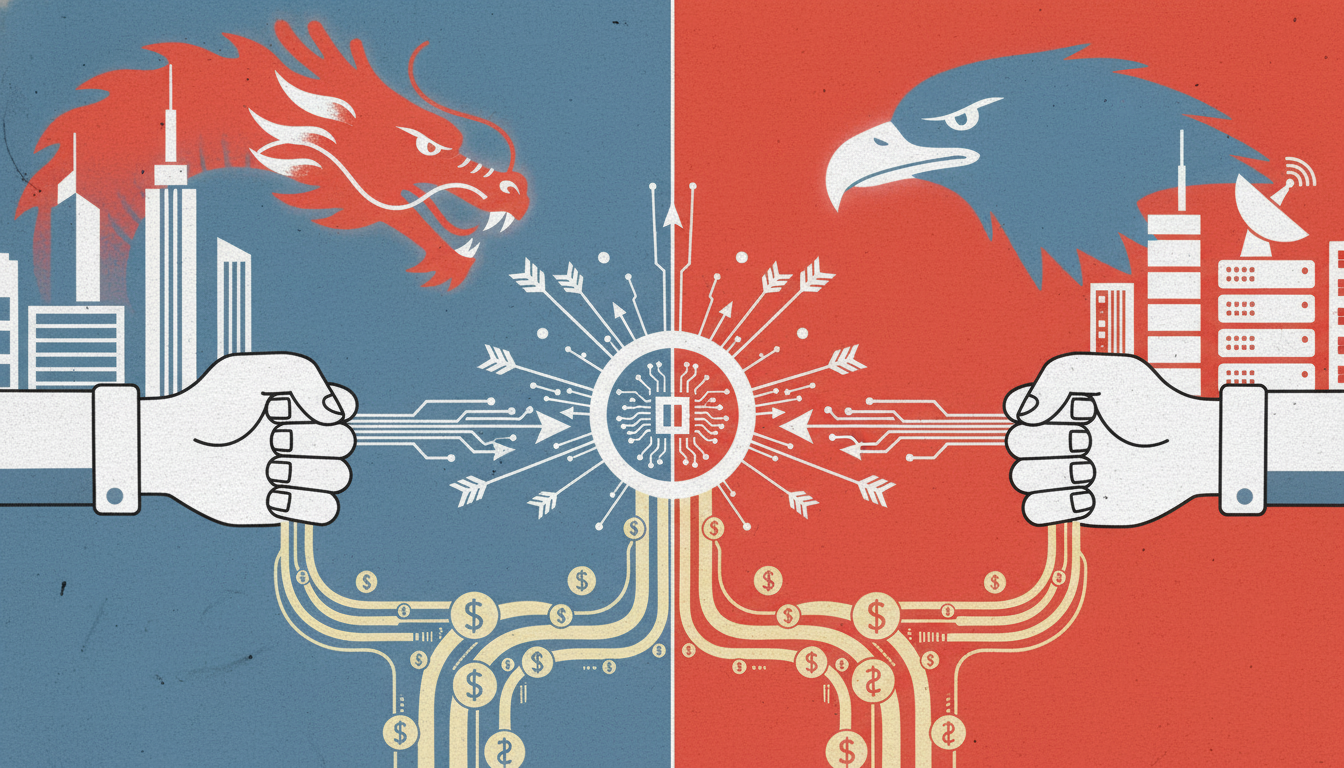
Editorial illustration for today's brief
Private Credit Fuels AI Arms Race as Governance Splits East and West Illustration: The Gist

Today's Top Line

Key developments shaping the AI landscape

Anthropic closes $65B round, nears trillion-dollar valuation

Anthropic's Series H at a $965 billion post-money valuation — paired with a $36 billion private credit facility to purchase Google TPUs — marks the arrival of infrastructure-scale financing logic in frontier AI, displacing traditional venture capital as the marginal funding mechanism.

Trump kills AI safety order after last-minute industry lobbying

A prepared executive order mandating pre-release safety reviews was withdrawn hours before signing after informal White House access by former AI czar David Sacks relayed industry objections, confirming that the US federal government will not be a meaningful checkpoint on frontier model deployment.

Huawei's Tau Scaling Law challenges the EUV export control chokepoint

Huawei announced an architectural framework targeting 1.4nm-equivalent chip performance by 2031 without EUV lithography, directly challenging the foundational premise of US semiconductor export controls and potentially rendering the ASML chokepoint insufficient as a containment mechanism.

Dell raises AI server outlook to $60B, triggering 40% share surge

Dell's fiscal-year revenue forecast signals that hyperscaler capex commitments are translating into hardware vendor revenues at unprecedented scale, with passive component supplier Taiyo Yuden separately warning of 'scary' supply chain stress beyond GPUs and memory.

EU AI Omnibus agreed as US simultaneously abandons federal oversight

The European Parliament and Council reached agreement on the AI Omnibus package just as Washington formally retreated from mandatory pre-deployment review, creating the widest transatlantic regulatory divergence yet and a compliance asymmetry that will shape where frontier AI development concentrates.

Alibaba cements China as default AI infrastructure partner for Global South

A real-time sovereign AI deal signed with Pakistan during PM Sharif's Hangzhou visit — backed by Qwen models now benchmarking in the global top five — illustrates how Chinese AI platforms are becoming the first-call option for emerging economies that US firms have deprioritised.

Agentic AI deployment races ahead of security as BadHost vulnerability exposes millions

A critical flaw in Starlette, a Python framework underpinning the majority of AI agent backends, endangered millions of deployed agents simultaneously, confirming that agentic infrastructure security is running 18 to 24 months behind the deployment curve.

Today's Podcast 21 min

Listen to today's top developments analyzed and discussed in depth.

0:00
21 min

Cross-Cutting Themes

Strategic analysis connecting developments across categories


Apollo-Scale Finance Displaces Venture Capital at the Compute Layer

The Apollo-Blackstone $36 billion TPU debt facility for Anthropic — structured so private credit owns the hard assets and leases them to the AI lab — is the clearest expression yet of infrastructure project finance logic migrating into AI compute. Taken alongside Anthropic's $65 billion Series H, the company is mobilising over $100 billion in a single financing cycle, a figure that rivals the annual capex of major semiconductor foundries. Dell's $60 billion AI server forecast and Iren's confirmed $1.6 billion Blackwell deployment provide the demand-side validation: hyperscaler capex is converting into hardware revenues at scale, with passive component supplier Taiyo Yuden warning that supply chain stress is now spreading beyond GPUs into inductors and multilayer ceramic capacitors critical to server power delivery.

The strategic implication extends beyond Anthropic. As this financing template propagates — private credit buys chips, AI companies lease them — credit covenants and lease terms, not equity governance, will increasingly determine which labs have reliable compute access. Mistral's CEO has explicitly identified capital scale, not talent or regulation, as Europe's binding constraint on AI sovereignty, and the contrast with Apollo-scale financing available to US frontier labs is stark. The emergence of AI token futures markets in both the US and China, and Sea Ltd.'s establishment of a dedicated AI investment scouting team in Singapore, suggest that the financialisation of compute is accelerating across geographies — but the structural gap between US and non-US capital formation remains wide.

Washington Deregulates as Brussels Enforces: The Governance Gap Widens

Two structurally opposite governance events occurred within days of each other. The EU AI Omnibus agreement locked in the world's most comprehensive AI regulatory architecture just as implementation guidance on high-risk systems narrowed the interpretive space firms have used to avoid regulation. Simultaneously, Trump withdrew a prepared executive order that would have created a federal pre-deployment safety review, leaving the US with no enforceable national-level safety gate for frontier models. The withdrawal was executed through informal White House access — industry executives received advance sight of the draft, raised objections through a well-connected intermediary, and achieved a substantive reversal within hours — confirming that formal rulemaking is not the determinative venue for US AI governance decisions. New York legislators escalating opposition to federal preemption language, and Rachel Reeves issuing a ministerial 'buy British' directive, illustrate how the governance vacuum at the federal level is being partially filled from below and from allied capitals.

The compliance asymmetry this creates is now a strategic variable for AI firms, determining where they locate frontier model development, how they structure data governance, and where they deploy high-risk applications first. The Khan-Met Police Palantir dispute adds a further dimension: even within jurisdictions, the question of who has democratic standing to review, condition, or block AI procurement by operationally independent public bodies remains structurally unresolved, generating institutional conflict as contract values escalate. Washington's deregulatory posture is simultaneously ceding international standard-setting leadership at the moment when norms around military AI, data sovereignty, and model accountability are being established — a vacuum that China, through deployment scale and bespoke sovereign agreements, is positioned to fill.

Huawei's Chip Gambit and China's Global South Buildout Reframe the AI Race

Huawei's Tau Scaling Law announcement represents an architectural bet that the US semiconductor containment strategy can be circumvented through chip stacking, interconnect innovation, and system-level optimisation rather than transistor density — the axis on which EUV denial was supposed to be decisive. The announcement is a roadmap, not a product, and the 2031 timeline leaves substantial room for the claims to be overstated. But the directional signal is unambiguous: Beijing has made an institutional commitment to developing an alternative technical framework for measuring semiconductor advancement, analogous to DeepSeek's algorithmic efficiency breakthrough in software. If this framing gains traction in Chinese domestic procurement or Belt and Road partner countries, it could bifurcate the global chip roadmap and displace TSMC and Intel roadmap authority in jurisdictions within China's sphere of influence.

On the deployment side, Alibaba's real-time sovereign AI deal with Pakistan — backed by Qwen models benchmarking in the global top five for coding — illustrates how Chinese AI platforms are becoming the default infrastructure for Global South digital sovereignty ambitions. The structural advantages are compounding: no US export control friction, willingness to negotiate bespoke government agreements, competitive model performance, and demonstrated deployment speed. MiniMax's fivefold enterprise client growth to one million users in six months corroborates the pattern. US AI policy is simultaneously pursuing export controls, domestic deregulation, and calls for a capability lead lock-in by 2028 — three theories of how America wins the AI race operating without resolution — while the commercial AI sector lobbies for deregulation domestically and expanded access to Chinese markets. The absence of a coherent US theory of victory is itself a strategic vulnerability that China's deployment-first approach is exploiting.

Category Highlights

Explore detailed analysis in each strategic domain